

Sermons
All Preachers
- Alison Fischer
- Annie Hayes
- Ari Wolfe
- Brother Emile
- Brother John
- Dan Carlson
- Dr. Scott MacDougall
- Emily Hansen Curran
- Harlowe Zefting
- Jack Bellioli
- José Quiñonez
- Marc Rieke
- Melissa Devereaux
- Michael Drell
- Michael Lewis
- Nathan Brostrom
- Nydia MacGregor
- Pastor Anthony Hughes
- Rabbi Rebekah Stern
- The Rev. Annie Jones
- The Rev. Clark Berge
- The Rev. Cn. Alissa Newton
- The Rev. Dani Gabriel
- The Rev. Dr. Bill McNabb
- The Rev. Dr. Daniel Prechtel
- The Rev. Dr. Mark Richardson
- The Rev. Dr. Paula Nesbitt
- The Rev. Dr. Ruth Meyers
- The Rev. Emily Boring
- The Rev. Erika Jackson
- The Rev. Helen Laverty McPeek
- The Rev. Joseph Delgado
- The Rev. Kristin White
- The Rev. Laura Eberly
- The Rev. Liz Tichenor
- The Rev. Maggie Foote
- The Rev. Marguerite Judson
- The Rev. Martin Elfert
- The Rev. Nikky Wood
- The Rev. Paula Nesbitt
- The Rev. Phil Brochard
- The Rev. Rachel Dykzeul
- The Rev. Will Bryant
- The Rt. Rev. Eugene Sutton
- The Rt. Rev. Marc Hadley Andrus
- The Rt. Rev. Nedi Rivera
- The Very Rev. Dr. Peggy Patterson
- Tom Varghese
- Tripp Hudgins
- the Rev. Canon Sierra Reyes
All Months
- January 2018
- February 2018
- March 2018
- April 2018
- May 2018
- June 2018
- July 2018
- August 2018
- September 2018
- October 2018
- November 2018
- December 2018
- January 2019
- February 2019
- March 2019
- April 2019
- May 2019
- June 2019
- July 2019
- August 2019
- September 2019
- October 2019
- November 2019
- December 2019
- January 2020
- February 2020
- March 2020
- April 2020
- May 2020
- June 2020
- July 2020
- August 2020
- September 2020
- October 2020
- November 2020
- December 2020
- January 2021
- February 2021
- March 2021
- April 2021
- May 2021
- June 2021
- July 2021
- August 2021
- September 2021
- October 2021
- November 2021
- December 2021
- January 2022
- February 2022
- March 2022
- April 2022
- May 2022
- June 2022
- July 2022
- August 2022
- September 2022
- October 2022
- November 2022
- December 2022
- January 2023
- February 2023
- March 2023
- April 2023
- May 2023
- June 2023
- July 2023
- August 2023
- September 2023
- October 2023
- November 2023
- December 2023
- January 2024
- February 2024
- March 2024
- April 2024
- May 2024
- June 2024
- July 2024
- August 2024
- September 2024
- October 2024
- November 2024
- December 2024
- January 2025
- February 2025
- March 2025
- April 2025
- May 2025
- June 2025
- July 2025
- August 2025
- September 2025
- October 2025
- November 2025
- December 2025
- January 2026
- February 2026
- March 2026
- April 2026
- May 2026
- June 2026
- July 2026
- August 2026
- September 2026
- October 2026

Nineteenth Sunday after Pentecost
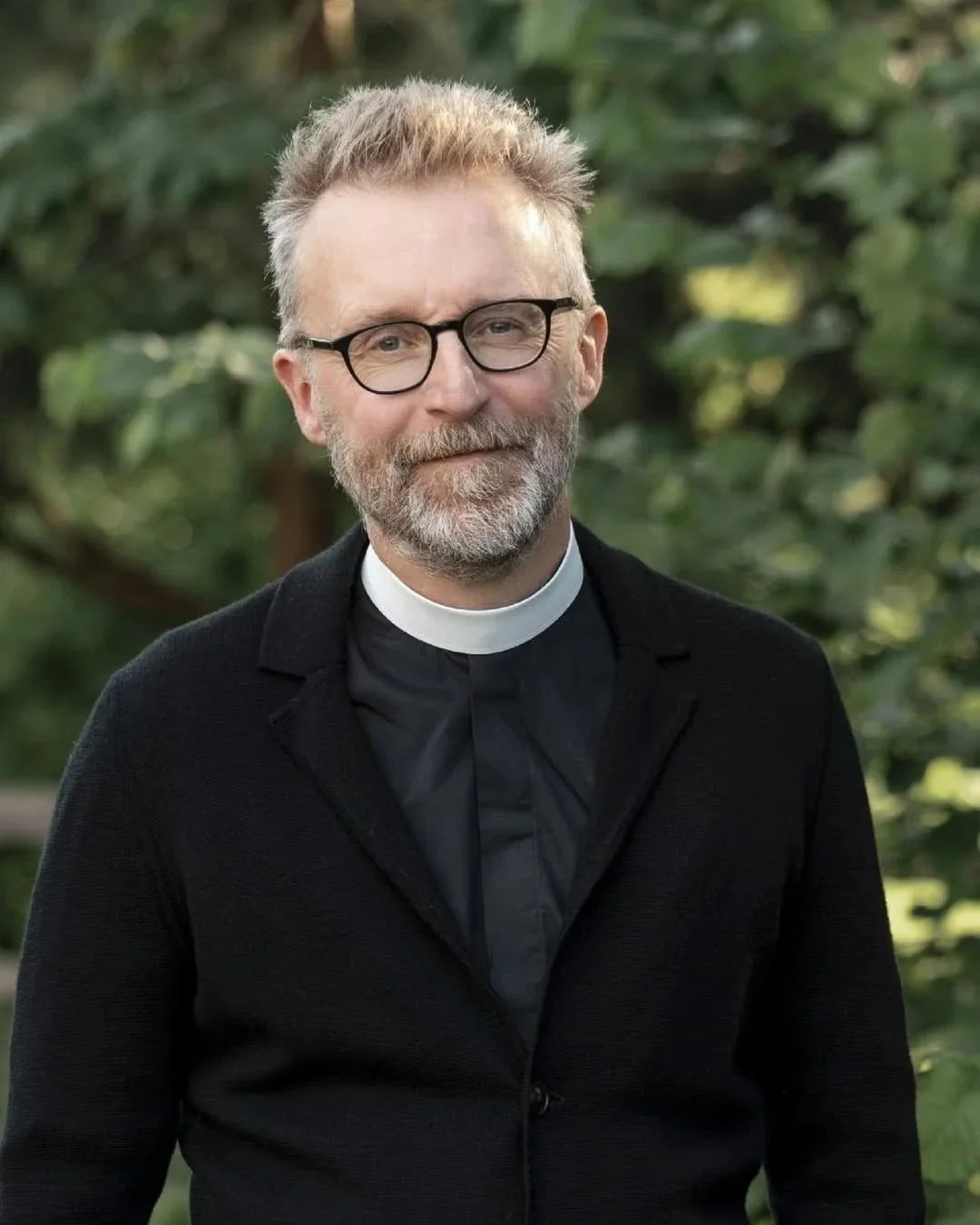
the Rev. Phil Brochard
Today’s sermon was a special one. We heard a “story” told in the style of the children’s curriculum Godly Play. This story celebrates the conclusion of our Living Waters capital project and all of the ways, old and new, that we learn and pray and gather and make church at All Souls. We encourage you to watch the video version of the sermon to see the pictures. You can do that on Youtube here: https://www.youtube.com/live/zOE99zN9gQc?si=9ol0ySeFShy8pDTb&t=1411
Eighteenth Sunday after Pentecost
the Rev. Phil Brochard
The sermon uses the preacher's childhood failure to water a neighbor's prized zinnias to explore the difference between good intentions and faithful action. In Matthew's parable of the two sons, one son refuses his father's request to work in the vineyard but later changes his mind and goes, while the other promises to go but never does. The first son ultimately does the father's will.
The parable is not about deciding who belongs and who does not; both sons remain sons. Instead, it reminds us that words and virtue-signaling cannot substitute for the difficult work of forgiveness, healing, accompaniment, and love. Most importantly, unlike the preacher's childhood zinnias, for which help eventually came too late, the kingdom of heaven always leaves room for change. Even at the last hour, we can turn around, enter the vineyard, and do the work—and we must leave room for others to do the same.

Seventeenth Sunday after Pentecost
the Rev. Dr. Ruth Meyers
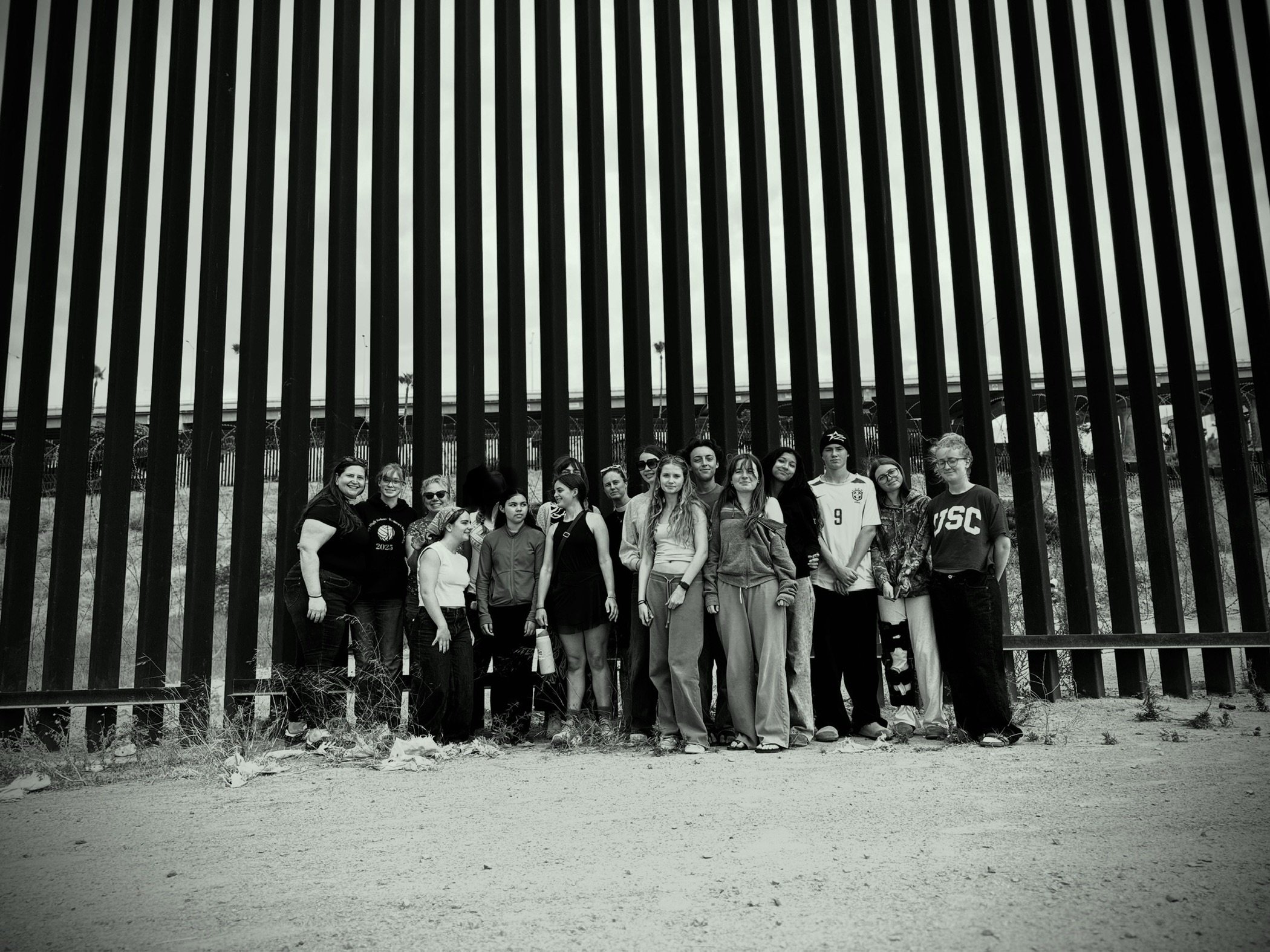
Using the All Souls youth's encounters with day laborers at the U.S.–Mexico border, the sermon explores Jesus's parable of the laborers in the vineyard. The youth discovered that hearing people's stories and seeing their faces made it impossible to dismiss their humanity. Jesus similarly invites his disciples to see the humanity of those who are overlooked and to reconsider assumptions about who deserves what.
In the parable, workers hired at the end of the day receive the same wage as those who worked from morning. The first workers resent this, even though they received exactly what they were promised. Their complaint reveals how easily another person's good fortune can make generosity seem unfair.
Drawing on John Chrysostom's Easter homily, the sermon presents God's kingdom as radically abundant: those who arrive first and those who arrive last are all welcomed into God's joy. Day laborer and landowner, immigrant and native-born, longtime disciple and newcomer all share God's gifts. Rather than competing over who deserves more, Jesus invites everyone to rejoice together in the extravagant generosity of God.

Sixteenth Sunday after Pentecost
the Rev. Phil Brochard
The sermon argues that forgiveness is essential to both the nature of God and the life of Christian community. Beginning with Francis of Assisi's addition of pardon to the Canticle of the Creatures, it presents forgiveness as something as fundamental as the rest of creation.
Jesus' parable of the unforgiving servant makes the point through an enormous contrast: a servant forgiven an impossibly large debt refuses to forgive a much smaller debt owed to him. God's extraordinary mercy toward us calls us to extend mercy to others.
Forgiveness does not mean forgetting harm, permitting abuse, or pretending wrongdoing did not occur. Rather, it means relinquishing revenge and refusing to hold another person's debt forever. It may require considerable time and patience. Ultimately, the sermon insists that a community not grounded in forgiveness is not grounded in God, because the mercy we give reflects the mercy we have received.

Feast of Creation in Christ
the Rev. Emily Boring
The sermon celebrates the Feast of Creation in Christ by exploring the Christian belief that everything is created, sustained, and ultimately gathered together in Christ.
Beginning with the preacher's awe-filled memory of watching a humpback whale repeatedly slap its tail against the ocean at sunset, the sermon contrasts scientific explanation with the deeper experience of wonder and relationship. Genesis and John's Gospel reveal creation not as something God made and left behind, but as an ongoing expression of God's creative love. The incarnation of Christ reveals God's relationship with matter and the profound interconnectedness of all existence. A whale—and every human being—is part of a vast web involving stars, oceans, microorganisms, food webs, and cycles of matter and life. Recognizing Christ within this interconnected creation transforms environmental responsibility: we care for the world not primarily because of guilt, fear, or obligation, but because we recognize our relationship with it and learn to love it.


Fourteenth Sunday after Pentecost
the Rev. Dr. Mark Richardson
The sermon continues the previous week’s Gospel lesson, in which Peter boldly identified Jesus as the Messiah. The preacher approaches Peter sympathetically, seeing him as a stand-in for all of us: sincere in his faith, courageous enough to make a great declaration, yet not fully aware of what that declaration will demand. Like Peter stepping onto the water, he understands enough to take the first step, but fear and incomplete understanding soon reveal his limits.
Immediately after Peter declares Jesus to be the Messiah, Jesus begins explaining what his messiahship actually means. He will go to Jerusalem, suffer at the hands of the authorities, and ultimately be killed. Peter cannot accept this. His response is not a gentle disagreement; he rebukes Jesus, insisting that this must never happen. Jesus responds with equal force: “Get behind me, Satan.” The preacher emphasizes the extraordinary intensity of this confrontation. Peter is presenting precisely the temptation Jesus has already rejected—the possibility of exercising power according to the world's familiar systems rather than following God's radically different way.
The argument therefore represents much more than a disagreement about what will happen to Jesus. Peter is confronting a choice that will eventually confront every disciple: whether to seek security within established institutions and systems of power or follow Jesus into a radically different understanding of life, power, suffering, and selfhood. Had Peter understood from the beginning where following Jesus might lead, the preacher wonders whether he would have followed at all. Jesus' path threatens not simply Peter's safety but his entire understanding of himself and the life he expected to live.
Thirteenth Sunday after Pentecost
the Rev. Emily Boring
Jesus’s question, “Who do you say that I am?”, is not a question Christians answer once and for all. We inherit understandings of Jesus from scripture, tradition, theology, worship, and culture, just as the disciples interpreted Jesus through their own religious history and political circumstances. But Jesus asks us to bring those inherited understandings into conversation with what we ourselves have experienced.
The preacher illustrates this through worship at the U.S.–Mexico border, where Christians on opposite sides of the wall pray, sing, exchange the peace, and celebrate Eucharist together. There, the wall—an instrument of separation—becomes like both cross and altar, making tangible the claim that Christ’s love overcomes division.
Theology is therefore a lifelong conversation between inherited faith and lived experience. Our answers will always be partial, just as Peter could correctly identify Jesus as Messiah while still misunderstanding what that meant. Christian faith is less about possessing a perfect answer than continually allowing Jesus’s question to challenge and transform us: Who do you say that I am, and how will your answer shape your life?

Twelfth Sunday after Pentecost
the Rev. Michael Lemaire
Rather than defending Jesus’ harsh treatment of the Canaanite woman, the sermon asks whether the encounter actually changed Jesus. The woman crosses cultural, religious, and gender boundaries to seek healing for her daughter. Jesus initially rejects her, describing his mission as limited to Israel and comparing outsiders to dogs who should not receive the children’s food.
But the woman brilliantly turns Jesus’ image around: even dogs receive crumbs from the master's table. Her persistence and love expose the abundance of the grace Jesus carries and challenge the limits he has placed around his mission. Jesus listens, changes his response, and heals her daughter.
The sermon suggests that this may reveal something profound about divine love: genuine love means being open enough to be moved and changed by others. Perhaps encounters like this helped Jesus understand that his mission extended beyond Israel to all people. Even more provocatively, this mother’s willingness to risk humiliation and rejection for someone she loved may have offered Jesus an example of the self-giving love he would ultimately embody on the cross.
Eleventh Sunday after Pentecost
the Rev. Phil Brochard
Following the execution of John the Baptizer, Jesus seeks solitude to grieve and pray while his disciples cross the Sea of Galilee. During the night, they become trapped in a storm. In the exhausting “fourth watch,” Jesus comes toward them across the water and says, “Take heart. I am. Do not be afraid.” The sermon emphasizes that “I am” echoes the biblical language of God’s divine presence.
Peter steps out of the boat toward Jesus but becomes frightened by the storm and begins to sink. When he cries, “Lord, save me,” Jesus immediately reaches for him. The preacher hears Jesus’ question—“You of little faith, why did you doubt?”—not as condemnation but compassion: I am here, and I will hold on to you.
Faith, the sermon argues, is not intellectual certainty, optimism, or a guarantee that life will be easy. Faith is trust—where we place our hearts. Sometimes we choose to step into storms; sometimes storms find us. Faith does not promise that we will never be frightened or overwhelmed. It promises that we will not be abandoned.
Tenth Sunday after Pentecost
the Rev. Phil Brochard
The sermon presents Matthew 14 as the story of two contrasting feasts. Herod's banquet ends with the execution of John the Baptist, revealing a kingdom built on fear, political power, and violence. Jesus, grieving John's death and perhaps fearing for his own life, withdraws briefly before responding to the crowds with compassion instead of despair.
When the hungry multitude gathers, the disciples assume people must depend on ordinary political and economic systems for food. The preacher contrasts this with Roman coins proclaiming the emperor as the source of sustenance. Jesus instead blesses, breaks, and shares five loaves and two fish until everyone is fed with abundance. The feeding miracle proclaims that God's kingdom—not earthly rulers—is the true source of life.
The sermon concludes by connecting this story to the Eucharist. Christians gather each week around Christ's table because it reminds them where true nourishment is found and, ultimately, which feast they belong to.
Ninth Sunday after Pentecost
the Rev. Phil Brochard
The sermon explores why Jesus taught in parables, arguing that their purpose was not to obscure truth but to awaken people whose hearts had become accustomed to injustice and complacency. Rather than offering simple moral lessons, Jesus used surprising, subversive stories that slowly transformed how people perceived God's "empire of the heavens."
Through the parables of the mustard seed, the leaven, the hidden treasure, and the pearl of great price, the preacher shows that God's kingdom grows quietly, unexpectedly, and often disruptively. It invades ordinary life, transforms people from within, and calls them to joyful surrender rather than comfortable religion. The kingdom cannot be controlled or neatly organized—it is already near, waiting to be perceived by hearts willing to see.
Eighth Sunday after Pentecost
This week’s sermon was preached by Emily+ and the youth of All Souls on Sunday, July 19th following an immersion trip to the U.S./Mexico border on the theme of immigration justice.
To protect the privacy of the youth, we have chosen not to publicly post an audio or visual recording of this sermon. The written text will be available as a Pathfinder article on Thursday, July 23rd. (If you would like to listen/watch instead, please email Emily+ for access to a sound/video recording).

Seventh Sunday after Pentecost
The Rev. Dr. Paula Nesbitt
Using the surprising story of flowers blooming a year after they were planted, the sermon explores Jesus' Parable of the Sower and the mystery of spiritual growth. Good soil consists of truth, hope, meaningful relationships, and openness to God's work, but growth often happens slowly and unexpectedly.
Drawing on experiences at the Anglican Consultative Council in Belfast, the preacher describes how delegates from across the world chose unity over division despite deep disagreements about gender, sexuality, and church governance. Rather than allowing political conflict to break apart the Anglican family, they committed themselves to mutual respect, continued dialogue, and remaining together.
The sermon concludes that the Church's calling is not to seek perfect conditions but to cultivate patient, loving relationships where faith can grow. Even rocky, thorn-filled soil should never be abandoned because God's grace often produces unexpected fruit where least expected.
Sixth Sunday after Pentecost
The Rev. Phil Brochard
The sermon explores Jesus' invitation, "Come to me, all you who are weary," by placing it in the context of John the Baptizer's question from prison: "Are you the one who is to come?" John's uncertainty reflects the surprising nature of Jesus' ministry, which transforms the world not through political power or revolution, but through countless acts of mercy, healing, and compassion.
Using the image of the yoke, the preacher explains how Jesus transforms a symbol of oppression into one of liberation. Rather than blind obedience, the yoke represents deep listening—to God and to one another. Celebrating the wedding of Lani and Tyree, the sermon presents marriage as a joyful example of this liberating yoke: a covenant in which two people freely bind themselves together so they can bear life's burdens together. Ultimately, Jesus' yoke is one of gentleness, humility, mercy, and shared love that sets people free by teaching them to carry one another's burdens.
Fifth Sunday after Pentecost
The Rev. Emily Boring
This sermon reflects on Jesus' teaching that discipleship requires not only serving others but also accepting our own vulnerability and dependence. Drawing on Matthew's Gospel, the preacher explains that Jesus intentionally sent his disciples out with no provisions so they would have to depend on the hospitality of strangers. This dependence is not incidental but essential to following Christ. Human beings are created for interdependence, continually giving and receiving throughout life. Welcoming others—and allowing ourselves to be welcomed—is itself God's reward, forming relationships that reflect the love and generosity at the heart of the Gospel.
Fourth Sunday after Pentecost
The Rev. Phil Brochard
Using stories of political disagreements with his father and his mother's earlier conflicts with her own father, the preacher reflects on how family tensions often arise when visions of justice challenge accepted social norms. He connects these experiences to a Juneteenth sermon about living between the "almost" of promised freedom and the "not yet" of fully realized justice.
Turning to Jesus' difficult teaching about family division, the preacher argues that Christ is not promoting conflict for its own sake. Rather, Jesus recognizes that faithful discipleship often creates tension when people challenge systems, narratives, and comforts that sustain injustice. The Gospel's call to justice inevitably creates friction between the world as it is and the world as God intends it to be.
The sermon concludes that freedom and justice require confronting the gap between promise and reality. The question is not whether conflict will arise, but whether those conflicts will produce light, growth, and transformation rather than merely generating heat and division.
Juneteenth Feast Day Celebration
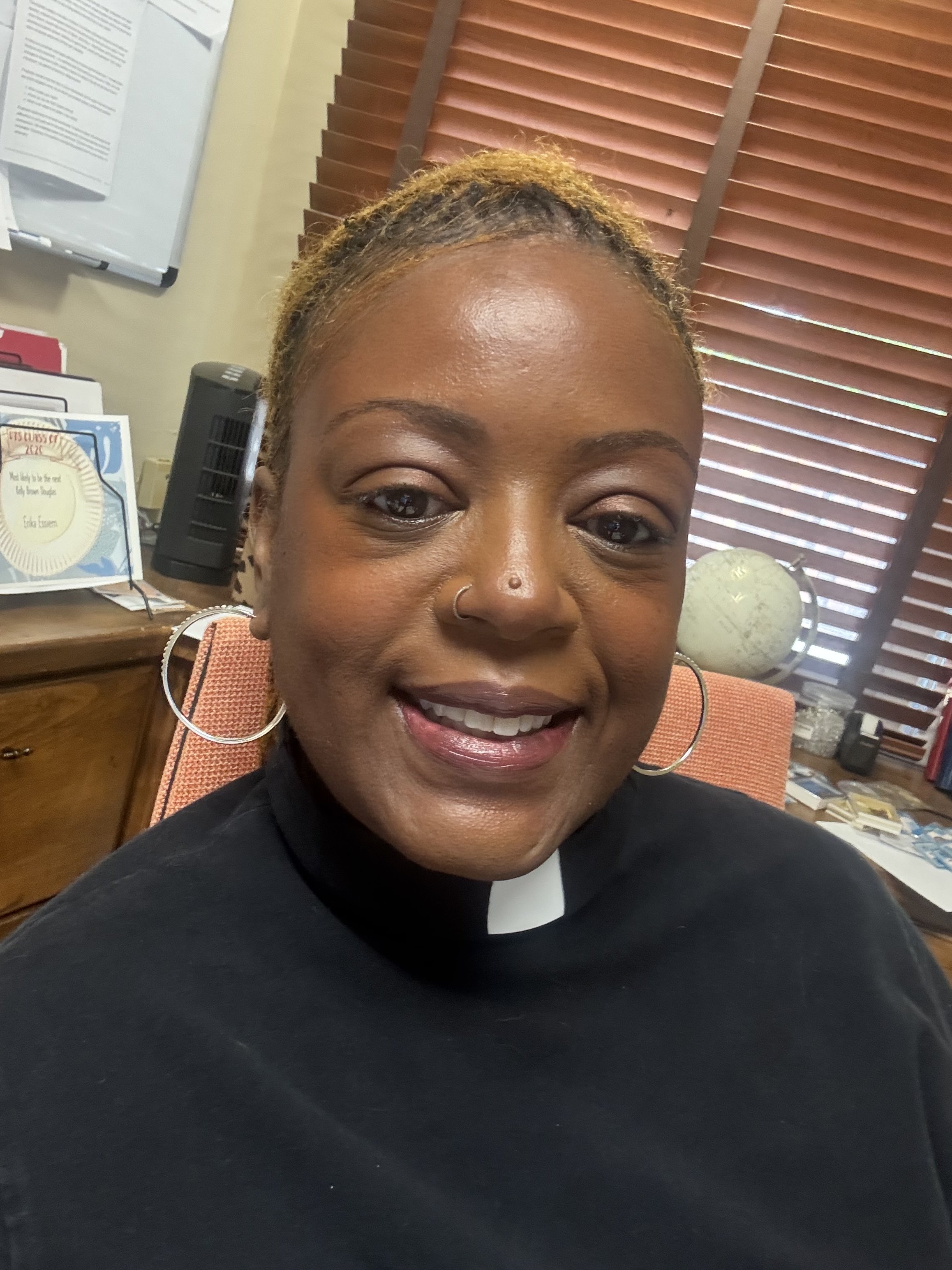
The Rev. Erika Jackson
Using the framework of living between "almost and not yet," this Juneteenth sermon explores the gap between freedom promised and freedom realized. Juneteenth itself exists because enslaved people in Texas remained in bondage more than two years after emancipation had been declared, revealing that legal freedom and lived freedom are not always the same.
The preacher connects this reality to Scripture. The Israelites waited for liberation after God promised deliverance. Paul envisioned a community without hierarchy in Christ. Jesus proclaimed freedom for the oppressed while ministering in a world still marked by injustice. In every case, God's people lived between promise and fulfillment.
The sermon challenges Christians to recognize who still lives in that gap today and to resist the temptation to settle for "almost." True Christian hope does not deny unfinished work; it trusts that Christ remains present within it. Until freedom is experienced by all, the work of liberation continues.
Third Sunday after Pentecost
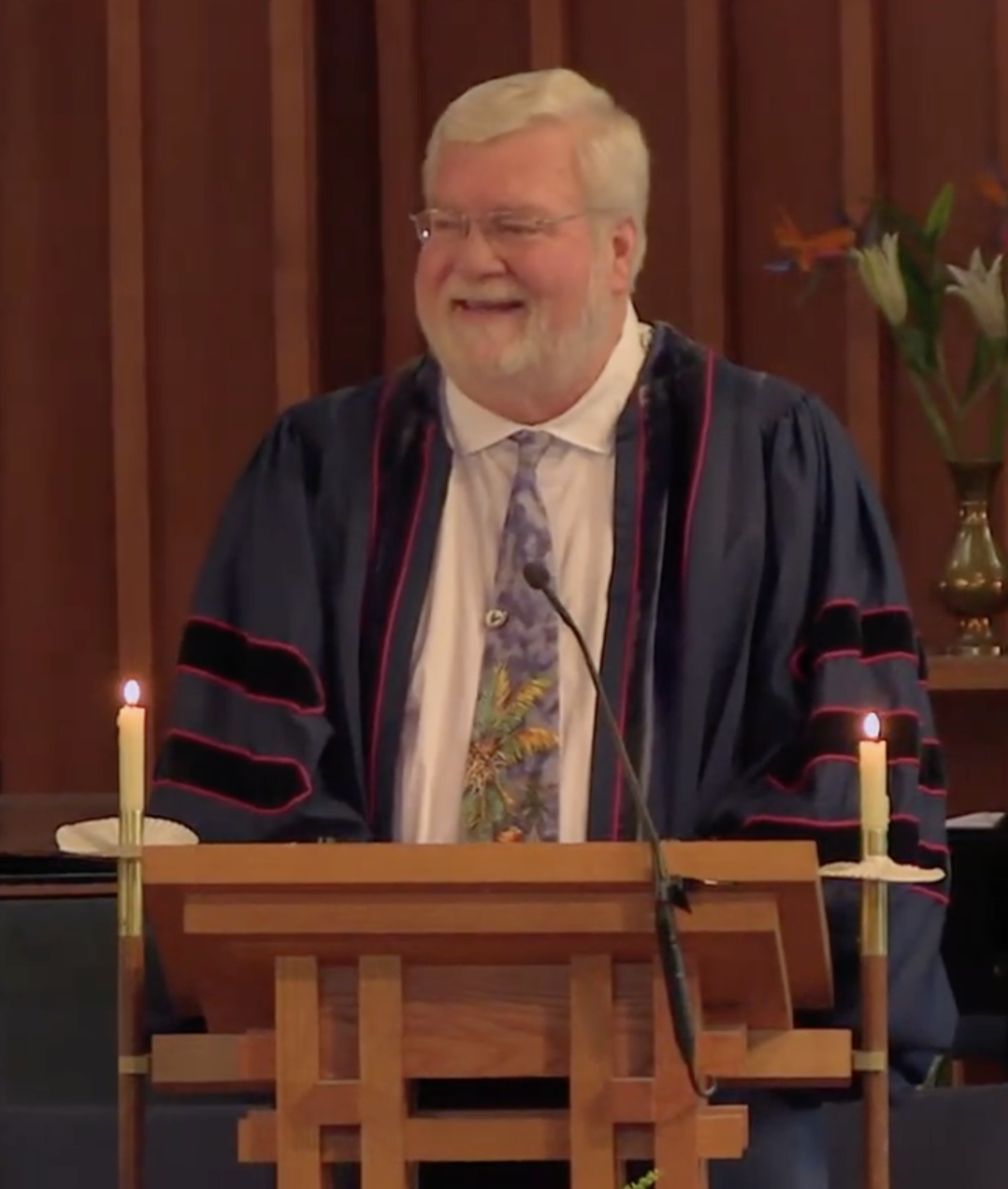
The Rev. Dr. Bill McNabb
Preaching during Pride Month, the preacher celebrates God's inclusive love and focuses on what he calls "the greatest verse in the Bible": Romans 5:1, which declares that believers are justified by faith and have peace with God through Jesus Christ. He argues that after describing humanity's brokenness, Paul delivers the astonishing good news that God has reconciled humanity to himself.
Using the humorous story of Chippy the Parakeet, the sermon explores how suffering can suddenly disrupt life. Paul does not teach that suffering is enjoyable, but that God uses it to produce endurance, character, and hope. The Greek word hypomonē—the ability to "hang in there"—becomes a central theme. The sermon concludes by affirming that God's love remains present even in hardship, summarized in Karl Barth's famous answer: "Jesus loves me, this I know, for the Bible tells me so."

Sermon Archives ––––
Until we get migrate over our archives, you can head over to our old site to listen to past sermons.